For CTOs and mobile teams

Native or React Native? Choose the direction that fits your product.

DigitalGoose helps mobile teams migrate React Native apps to native Swift and Kotlin, or consolidate native apps into React Native, without stopping delivery.

Free · 30 minutes · No commitmentBook a free architecture call
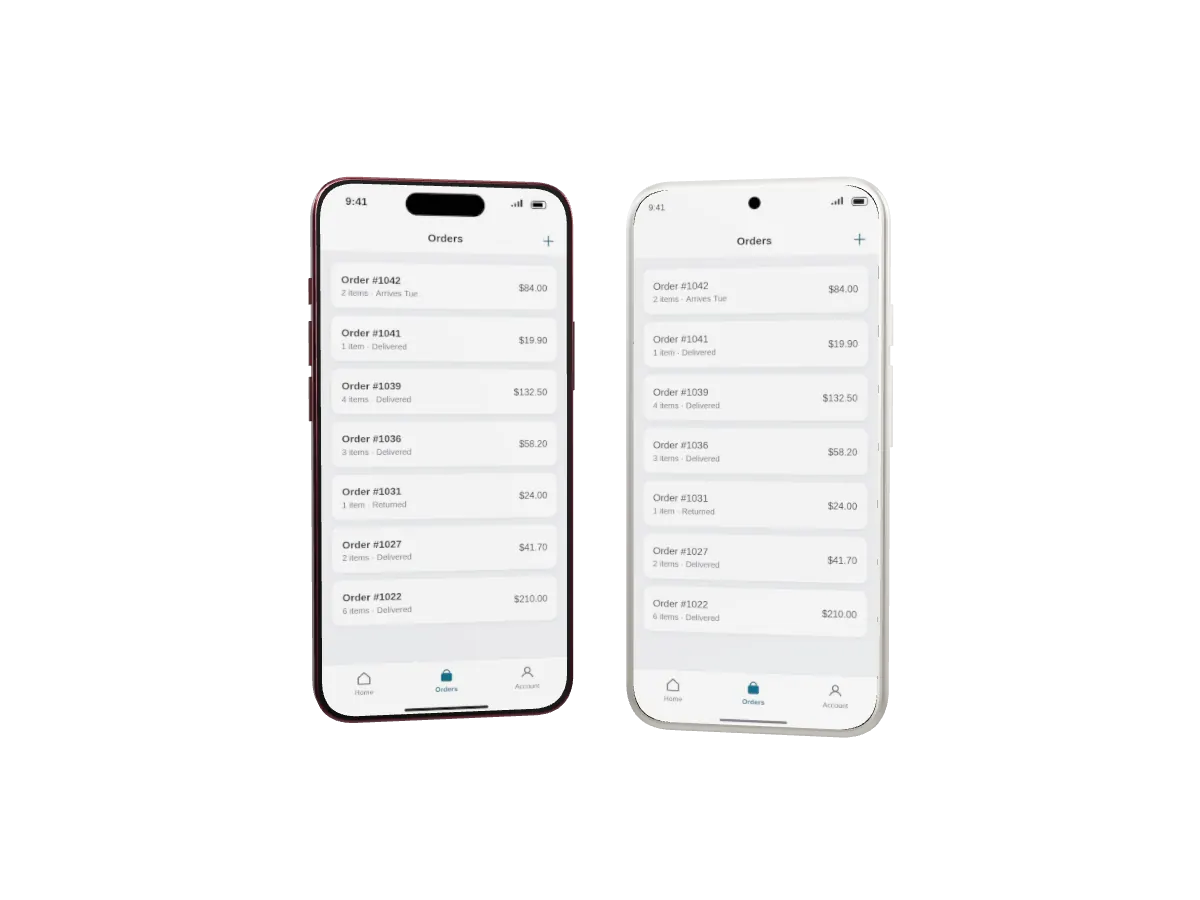
See how migrations work An iPhone and a Pixel running the same React Native orders app.

01 · Go native

Native where it counts.

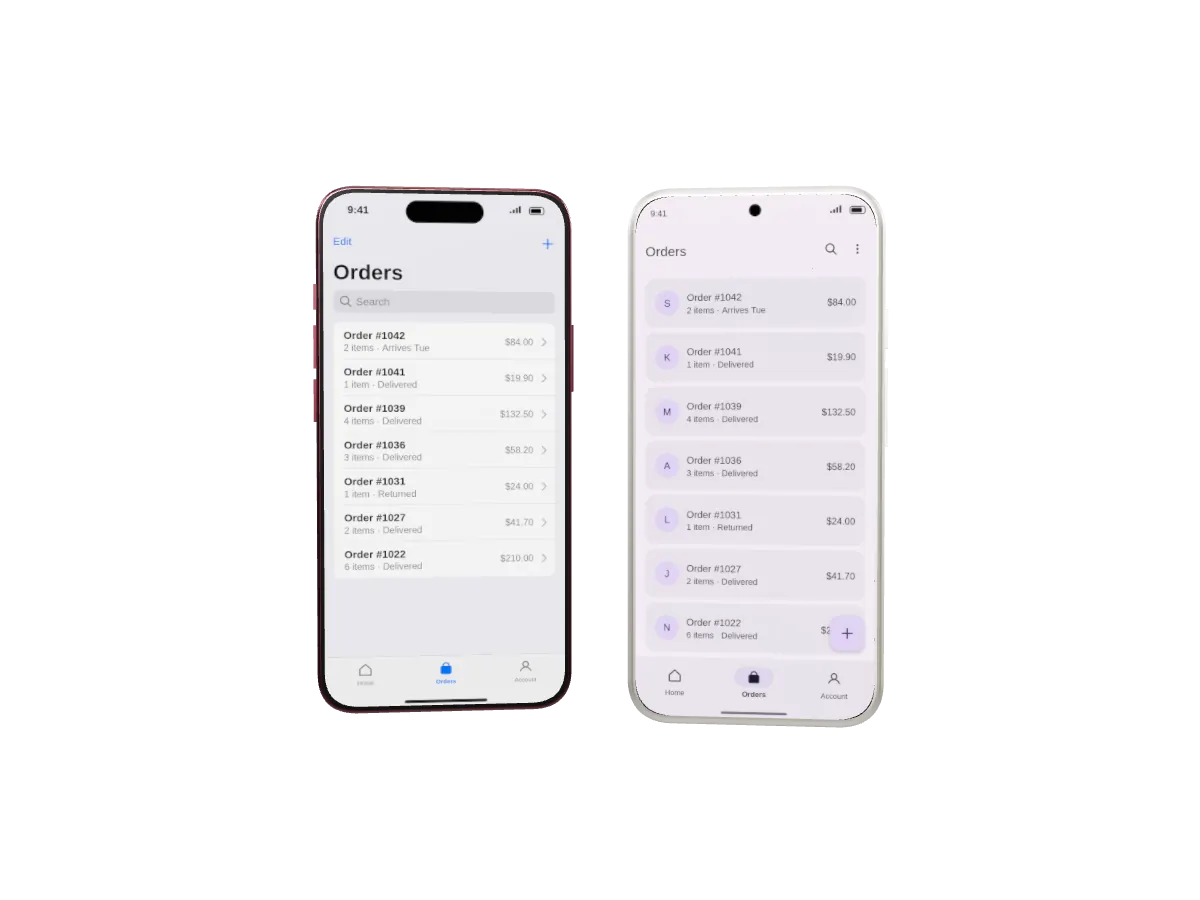
The same orders screen, rebuilt in SwiftUI and Jetpack Compose. Large titles and grouped lists on iPhone. A top app bar, tonal cards and a floating action button on Pixel.
  • SwiftUI
  • Jetpack Compose

02 · Native navigation

Navigation that feels right on each phone.

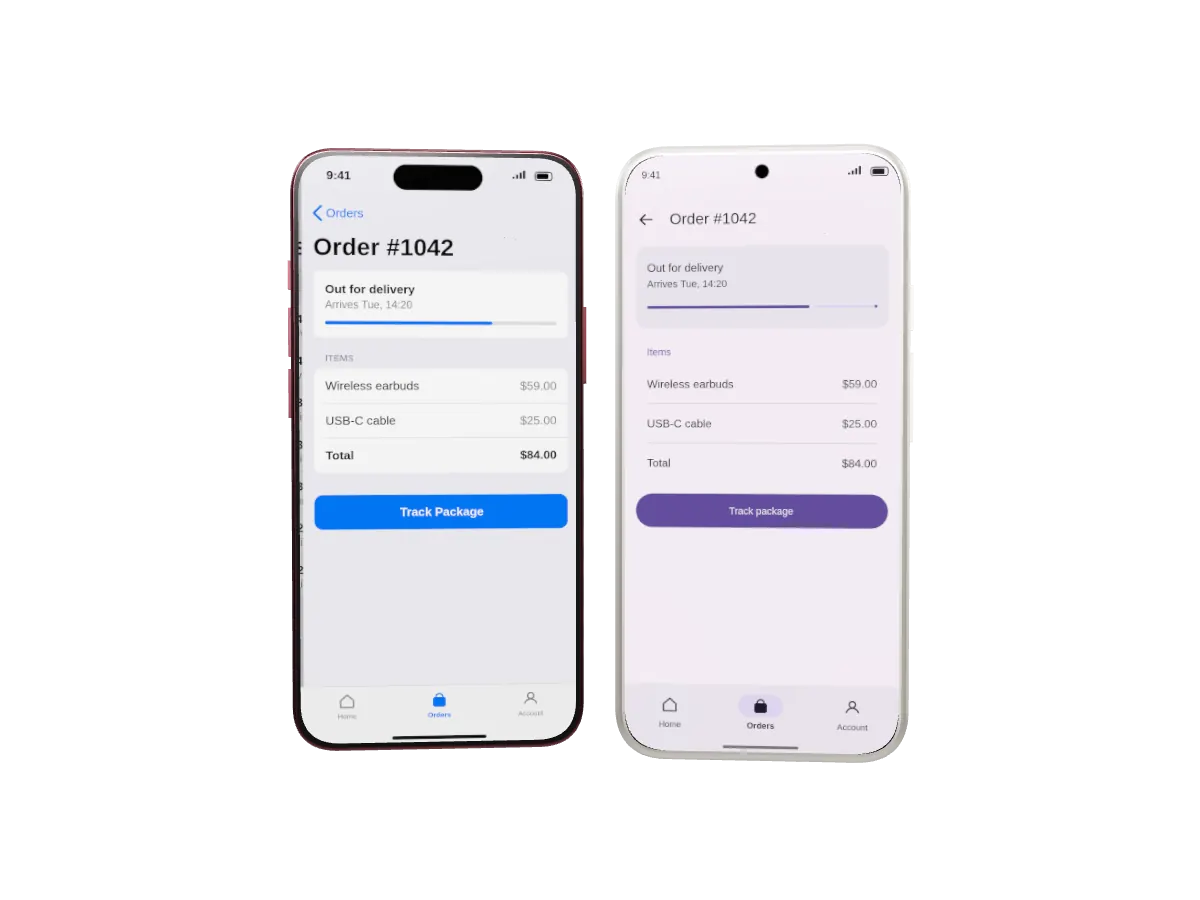
iOS pushes screens in from the right and swipes back from the edge. Android uses shared-axis transitions and predictive back. Each platform gets its own navigation stack.
  • NavigationStack
  • Predictive back

03 · Widgets and live updates

Your app, outside your app.

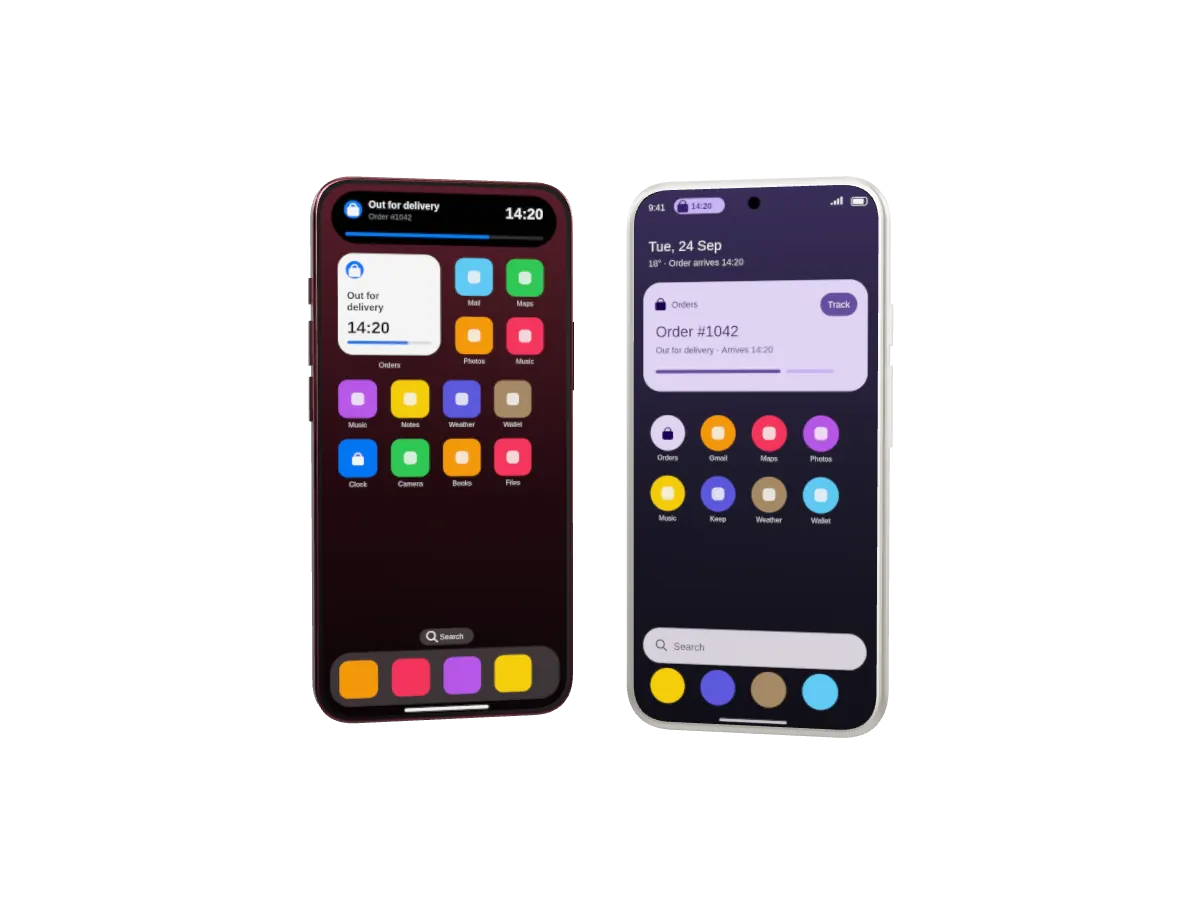
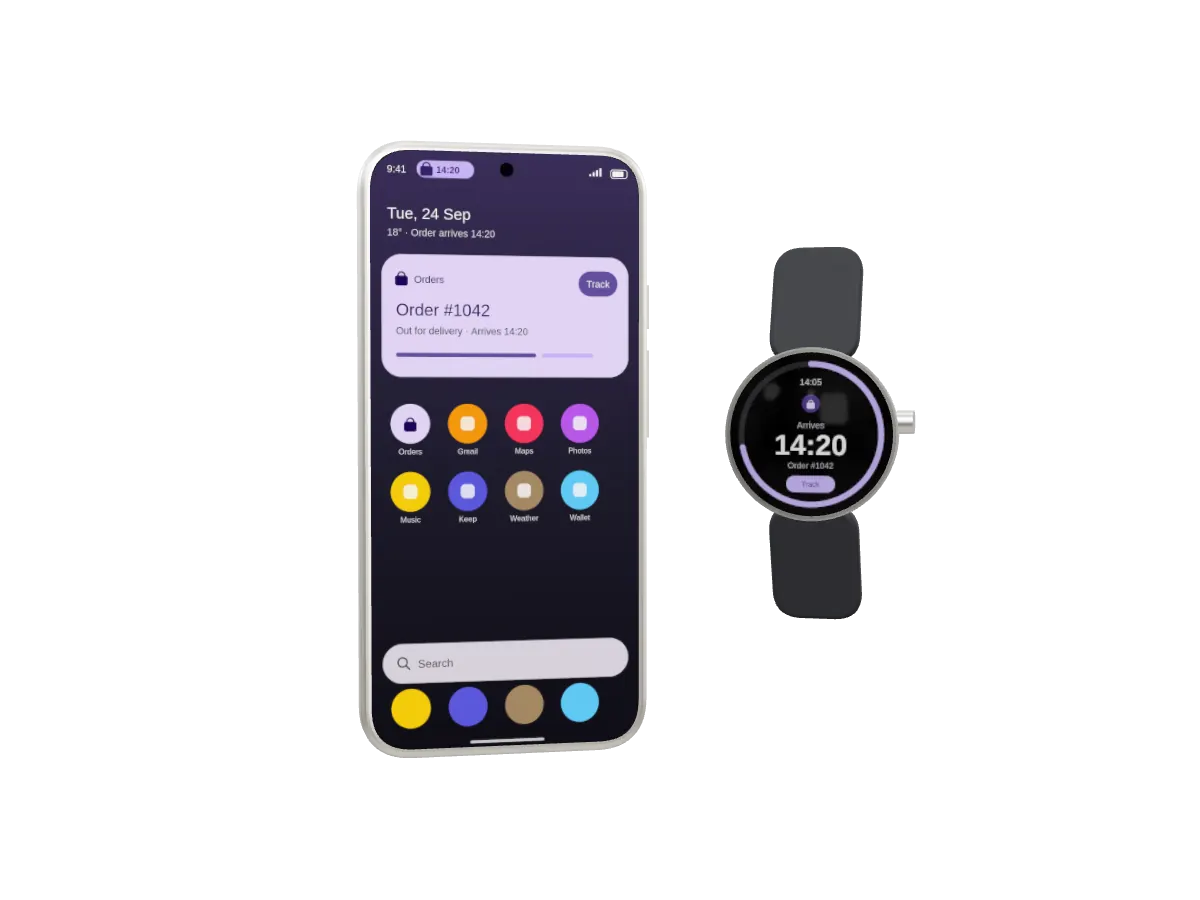
Home screen widgets built with WidgetKit and Glance. Delivery status in the Dynamic Island and in Android live updates, straight from the order.
  • WidgetKit
  • Live Activities
  • Glance
  • Live Updates

04 · Wear OS

On the wrist, too.

A Wear OS tile shows the same order, synced from the phone. Tiles and complications are native by design, so we build them natively.
  • Wear OS tiles
  • Compose for Wear OS

05 · The other direction

Or bundle it all into React Native.

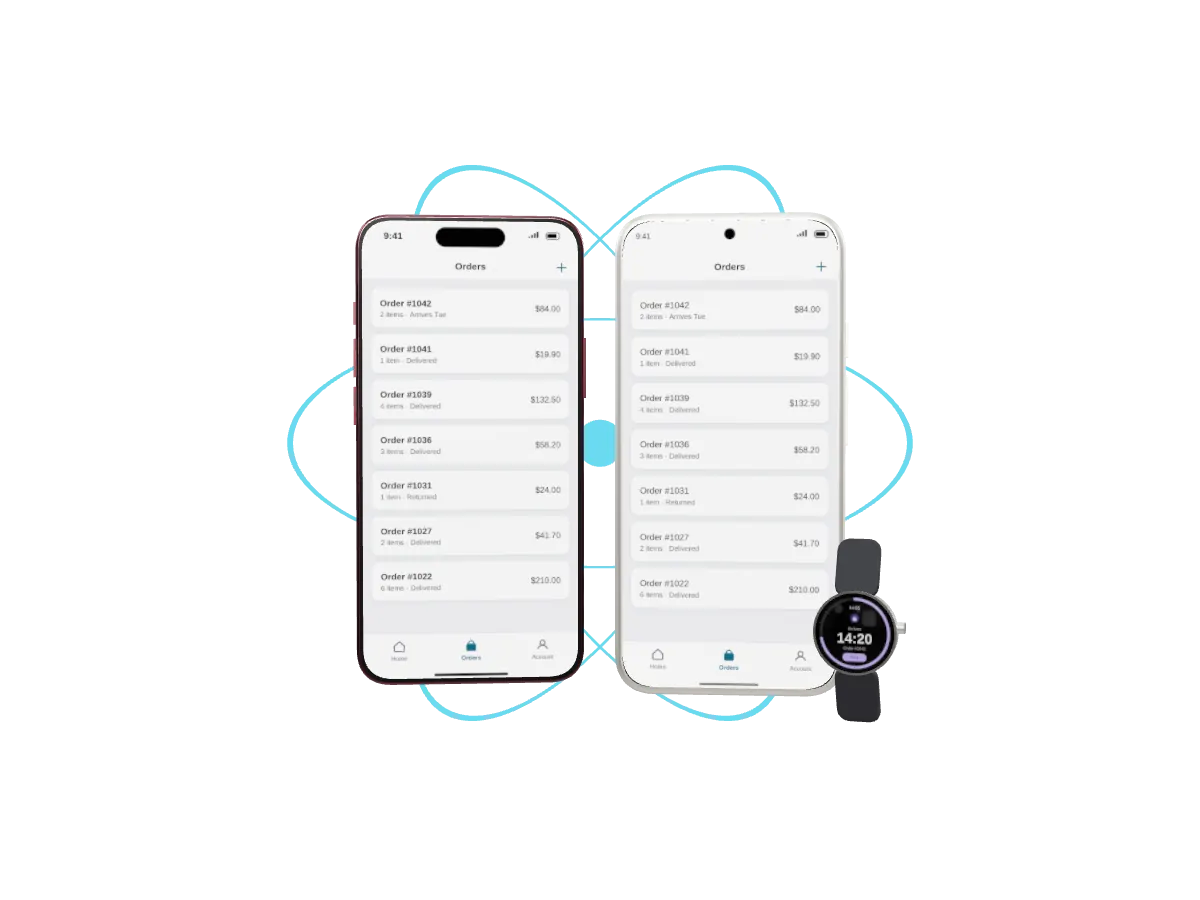
Two native apps become one React Native codebase, often screen by screen inside the existing apps. Widgets, Live Activities and the watch stay native and talk to the shared app.
  • Brownfield
  • New Architecture
  • Native modules

Does your stack still fit your product?

Both directions have a breaking point. Most teams feel it long before they name it.

You've outgrown React Native if…

  • Animations and gestures never feel quite native
  • Every OS release means waiting for a library update
  • Bridges and native modules break with each upgrade

You're paying twice for native if…

  • iOS and Android ship the same feature weeks apart
  • Two teams maintain the same business logic
  • Hiring for two platforms slows your roadmap

Two directions. One goal: the right architecture.

We are not a one-stack shop. We help you move the way your product needs.

React NativeSwift & Kotlin

React Native → Swift & Kotlin

Not a line-by-line port. We find where platform conventions matter to your users and rebuild those parts with SwiftUI, Jetpack Compose, widgets, Live Activities and native APIs.

  • SwiftUI
  • Jetpack Compose
  • Widgets
  • Live Activities

Native / brownfieldReact Native

Native or brownfield → React Native

Consolidate two codebases into one, often incrementally by embedding React Native into your existing app. Performance-critical parts stay native where it makes sense.

  • Brownfield
  • Shared logic
  • Incremental
  • New Architecture

Not sure yetWritten recommendation

Architecture assessment

Not sure which way to go? A short, fixed-scope review of your app, team and roadmap with a written recommendation.

Request an assessment

Also available

Migrations are what we do best. These are the other ways we can work with your team.

New mobile apps from scratch

For startups and new product launches: a mobile app built in React Native or native, with an architecture that will not need migrating a year from now.

Plan a new app

React Native maintenance

Ongoing care for an existing React Native app: OS and dependency upgrades, New Architecture readiness, bug fixes and new features.

Ask about maintenance

Web app engineering

Web apps and the backends behind them, built to share logic and APIs with your mobile product.

Discuss a web project

Mobile & web security audit

An independent security review of your iOS and Android apps, your web app and the APIs behind them, by a specialist we work with. You get a prioritised report with clear fixes.

Ask about a security audit

Rewrite with intent, not by copy-paste.

Before any code, we map which screens and flows depend on platform behavior (navigation, gestures, accessibility, system integrations) and which logic should stay shared. The result is an app that feels at home on each platform and a codebase your team can move fast with.

iOS

Android

Platform-specific

  • Navigation patterns
  • Gestures & haptics
  • Accessibility
  • System integrations

Stays shared

  • Business logic
  • API & data layer
  • Validation rules
  • Analytics contracts

A migration that never stops delivery

Four steps, each with a clear output. You keep shipping the whole way through.

Start with a free call

Your releases keep going out during every step.

  1. Assessment

    Codebase review, pain points, product goals.

  2. Migration plan

    Target architecture, priorities, risks, estimate.

  3. Incremental migration

    Screen by screen or module by module, while you keep shipping.

  4. Handover

    Documentation and knowledge transfer to your team.

Questions teams ask before migrating

Question not here? Bring it to the call, or write to us.

Ask a question

How much does a migration cost?

It depends on the size of the app and how much of it has to change. We start with a fixed-scope assessment, which ends with a written estimate, so you know the cost before committing to the migration itself.

How long does it take?

An assessment takes one to two weeks. Migrations usually run from a few weeks for a focused module to several months for a full app. Because we migrate incrementally, you see results in production early instead of waiting for a big-bang release.

Can we keep shipping features during the migration?

Yes, that is the point of the incremental approach. We migrate screen by screen or module by module, so your roadmap keeps moving and every step can ship on its own.

How involved does our team need to be?

We need a few hours a week from someone who knows the product and the codebase. Your developers can pair with us on migrated parts, which makes the handover shorter and the new code theirs from day one.

Who owns the code?

You do. All code lives in your repositories from the first commit, and you own it fully. We do not use proprietary frameworks that lock you in.

How do you decide between native and React Native?

We look at your product, your users and your team: how much platform-specific behavior matters, how often you ship, who you can hire and what your roadmap needs. Sometimes the answer is a mix, and we say so.

Not sure your current stack still fits your product?

Let's talk it through in 30 minutes, no commitment.

Free architecture call

  • 30 minutes
  • Video call
  • No commitment

Pick a time that works for you. You will leave knowing which direction fits your app.

Book a call

Loading the calendar… If it does not appear, use the button to book on the scheduling page.

Prefer to write?

Send a message or request a written migration assessment. We reply within one business day.

By sending, you agree to the privacy policy.

Or write directly to hello@digitalgoose.pl · LinkedIn

Book a free architecture call